Why It Is Important to Reflect on the Student Protests
of the 1930s
Why It Is Important to Reflect on the Student Protests of the 1930s
Discussion / exhibition, January 21, 2012
Participants in the conversation: Milan Radanović (final year history student), Nebojša Vukelić (student, participant in the Plenum of the Faculty of Philosophy in Belgrade), Jelena Martinović (student, participant in the Plenum of the Faculty of Philosophy in Belgrade), Dušan Komarčević (journalist, E-novine)
Moderation: Vida Knežević, Marko Miletić (Kontekst kolektiv)
Student protests and blockades based on the principles of the plenum, as a directly democratic student body – such as those held at the Faculty of Philosophy and Philology in Belgrade during 2011 – are an increasingly common occurrence at the universities of Belgrade, Zagreb, Ljubljana, Rijeka, Novi Sad and other cities in our region. The key goals of all these protests relate to the possibility of achieving publicly funded education accessible to all, then the defense of university autonomy and student self-organization.
Although this fact is almost unknown to the public, student struggles based on the principles of direct democracy were a very present form of organization in the progressive, that is, revolutionary student movements at the University of Belgrade between the two world wars, and especially during the 1930s. The then capitalist order, the economic crisis and the general fascism of society, are just some of the possible similarities that we can observe in the social, political and economic situation that today’s students face. The importance of the student struggles of that time in the history of student organizing is also demonstrated by historical data on the number of students involved in them; approximately half of the total number of students at BU were involved in progressive student movements.
The discussion will focus on the complex social, political and cultural context of the 1930s in the Kingdom of Yugoslavia with an emphasis on the student movements of that time, then on the specific event and circumstances related to April 4, 1936, as well as on aspects of media reporting and possible parallels in rhetoric that can be observed in the attacks, condemnation and discrediting of student struggles.
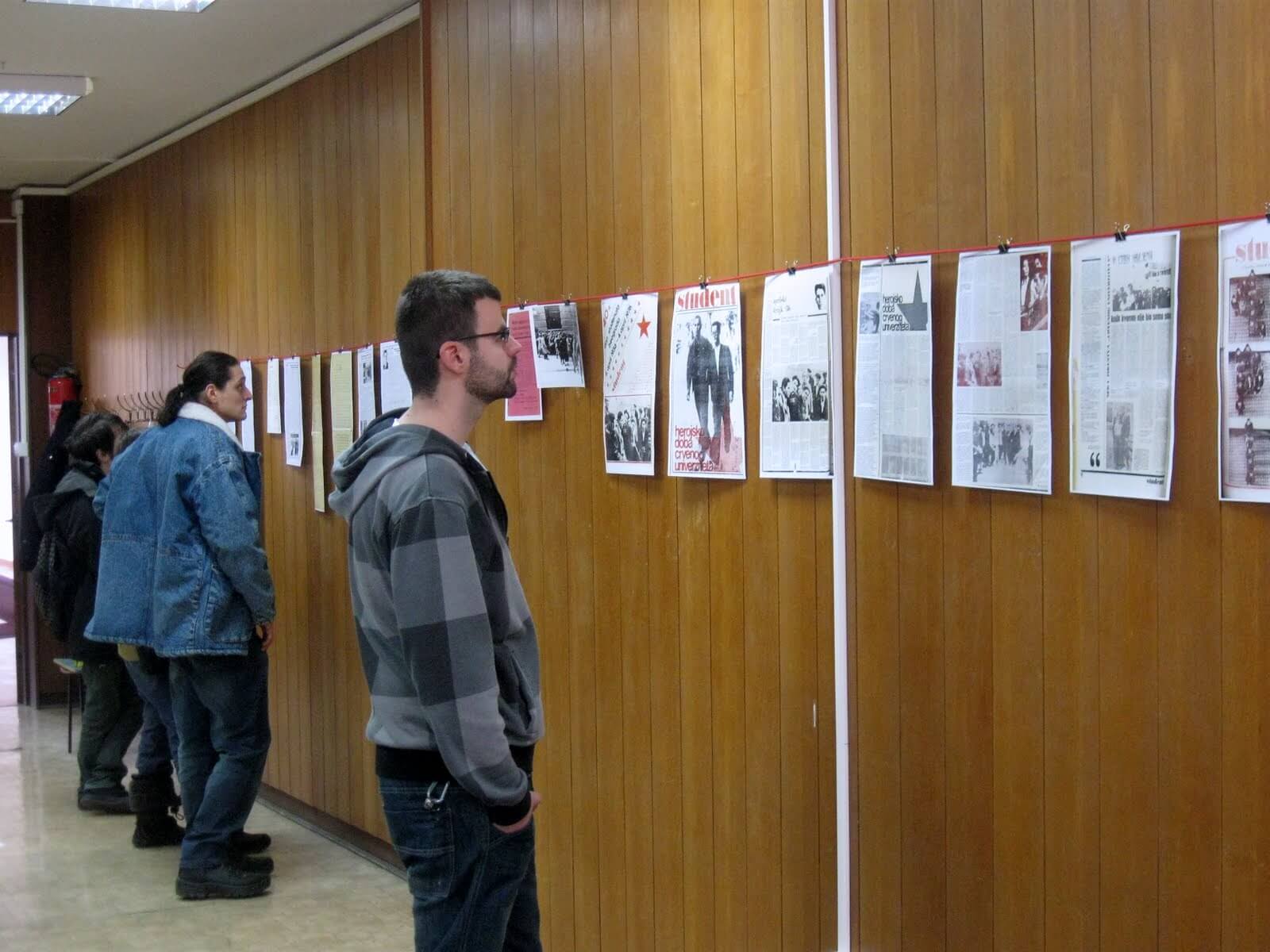


The discussion will be accompanied by an exhibition of collected archival materials and media articles from the daily newspaper “Politika” from the 1930s, as well as excerpts from “Student” – a weekly newspaper of Belgrade students, from the late 1970s, as well as current documentation regarding the last protest by students of the Faculty of Philosophy at the University of Belgrade.
The conversation is being held as part of the project On Solidarity.