EXCEPTION
Contemporary art scene of Prishtina
(2008)

ODSTUPANJE
Savremena umetnička scena Prištine
(2008)
EXCEPTION
Contemporary art scene of Prishtina
exhibitions / panel discussions / presentations / publications
22.01-05.02.2008 Museum of Contemporary Art of Vojvodina, Novi Sad
07.02-15.02.2008 Kontekst gallery, Belgrade
The “Exception” exhibition in Novi Sad and Belgrade is one segment of the production of young artists, women and men from Prishtina, who show their work both locally and internationally, and are formed after the 1999 war, in the time when Kosovo lives away from Serbia. It is a generation of artists which is almost unknown in Serbia. The last exhibition of contemporary artists, today of the middle generation, from Kosovo in Belgrade was held in 1997 (“Përtej”, CZKD) and after that, the Belgrade and Novi Sad audience met artists, theoreticians and cultural workers from Kosovo at sporadically organized presentations.
The name of the project refers to the exception of this exhibition and the project from the mundane today in Serbia, where one speaks of Kosovo only in the context of territory and status and where Albanians are simply not the topic. It refers to the exception of the Albanian society of the nineties from the system and building a parallel (boycotting the repressive hegemonic system), exception in the future where unreflected past determines both the general and individual views on the world or exception of these artist from Kosovo from the artistic practice of the previous generations.
The exhibition is realised at the time when declaration of independence is expected and prepared in Kosovo, and there are attempts in Serbia to recreate the atmosphere before the Balkan Wars from the beginning of the twentieth century. There are attempts to replace the romantic enthusiasm of yesteryear with the tension-making media pressure regarding the vital importance of Kosovo as the inalienable part of the Republic of Serbia. For many decades the anti-Albanian propaganda in Serbia, which culminated in the eighties, with the emergence of the radical nationalism of Milošević’s politics is still a very important phantasmal field of politics in Serbia. During the past twenty years the communication between Prishtina, Belgrade and Novi Sad was selective and sporadic, and such a level of communication is the consequence of a semi-official program of apartheid conducted by the official Belgrade; conscious self-isolation and boycotting the official institutions of the Republic of Serbia by the Albanian society in Kosovo during the first half of the nineties and radicalisation of the clashes in Kosovo in the second half of the nineties, and practically, secession of Kosovo from Serbia after 1999 upon the establishment of the United Nations control. Although Kosovo has, apart from a small interval during the Second World War, directly or indirectly been a part of Serbia since 1913, the official politics treated Albanians as a foreign body and, in accordance with the racist and cultural-racist stereotypes about Albanians were formed, which were a justification for “ethnic cleansing” during the nineties. When you have this in mind, it is not surprising that society in Serbia today does not know the Albanian culture and society in Kosovo, as it was the case in the past decades. A total blockade of information about the Albanians and partial about the Serbs from Kosovo in everyday media reporting in Serbia creates an unease feeling and it is not appropriate to speak of people who live there, which presents information genocide of a kind.


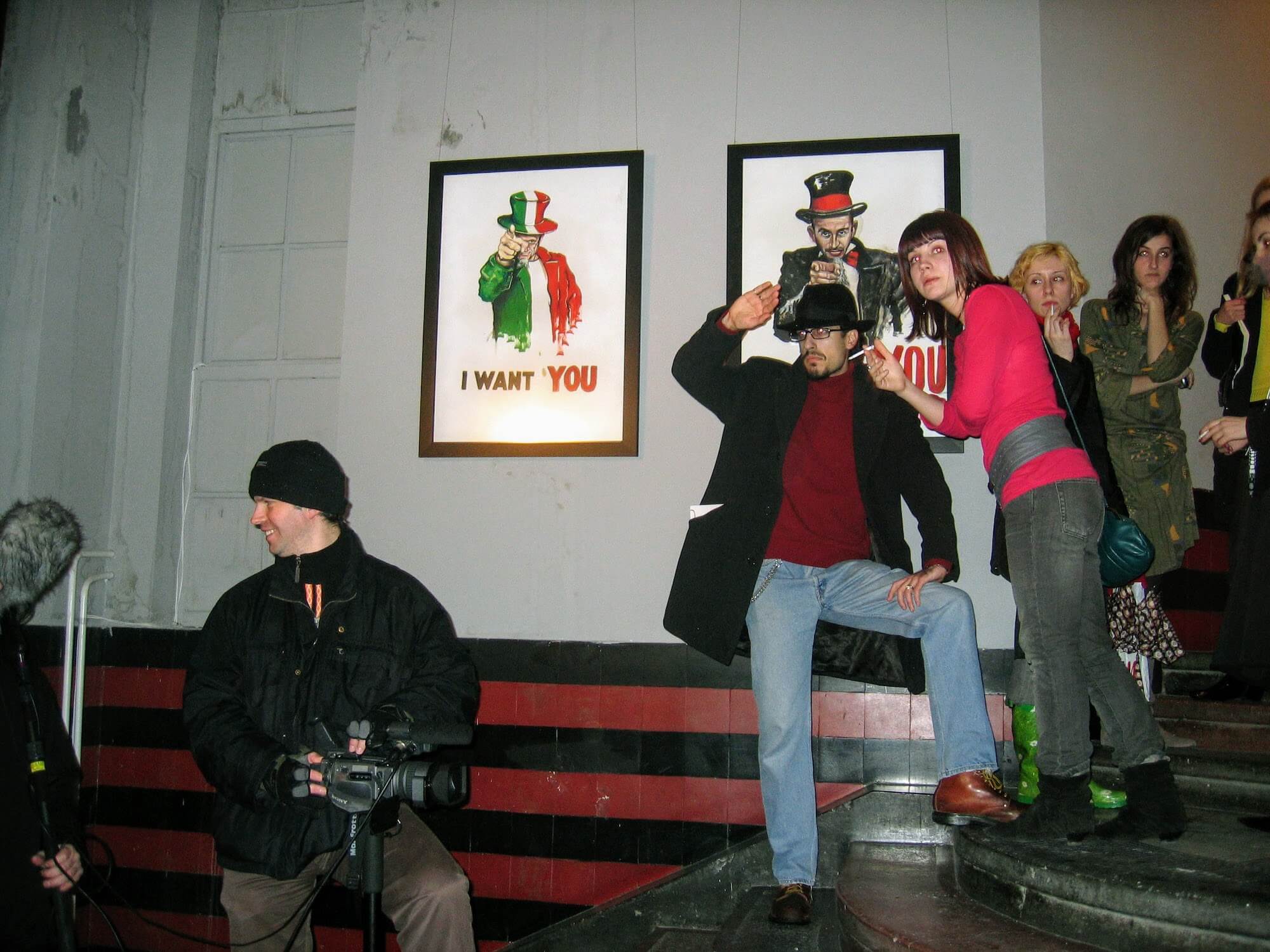


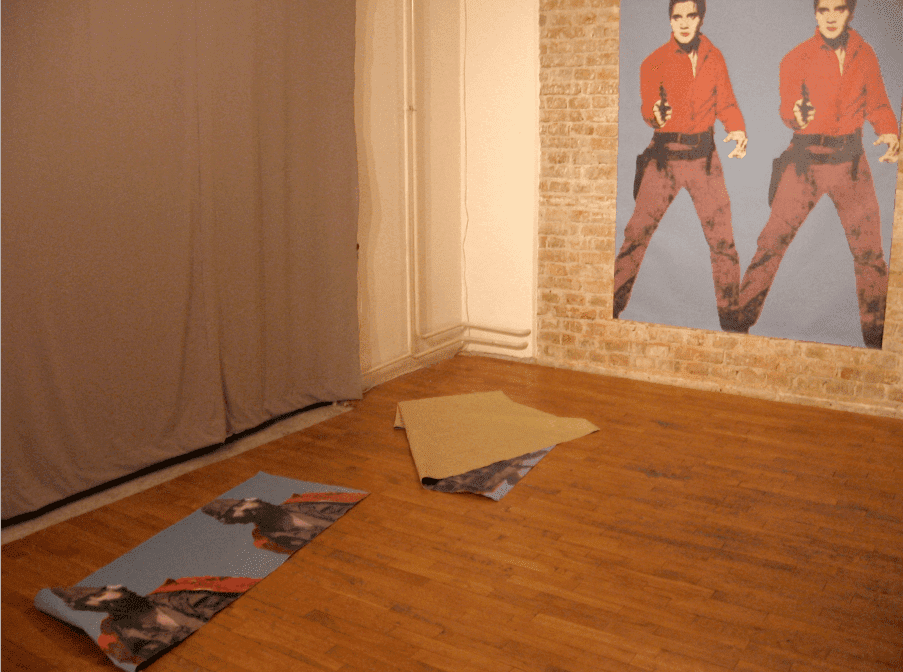
The exhibition examines the dominant cultural hegemonies of Europe, Serbia and Kosovo, as and national and gender identities in the field of visual art that are defined by Balkan particularisms, interest zones of global security alliances, doctrines of limited sovereignty, nationalisms, conditions and consequences of Euro-Atlantic integrations and consolidation of capitalism. The works presented in this exhibition can be seen as two conceptual units. The first represents the critical intervention of artists from Kosovo in the space of global artistic representation and the art market dominated by the West. The second part includes works that deal with the problems of Kosovo society and the “under construction” state with a focus on national and gender identity.
The idea of the “Exception” exhibition is to, together with roundtables, presentations and publication in the forthcoming period, analyse certain facts that an average person from Serbia was not allowed or did not want to know. It especially concerns the functioning of a parallel society in Kosovo, as a result of a massive “differentiation” and exclusion of the Albanians from the political life in Kosovo after 1989. After the cognitive and emotional production (of art as a product at an exhibition) as a part of post-industrial culture as economy, the project presents both women and men artists, theoreticians and people active in culture who will discuss art, culture and society in Kosovo focusing especially on artistic and cultural relations between Serbia and Kosovo. What is in this case the field of art? The field of art is a place where, among other things, people talk about something that has to be talked about publicly, in media and parliament, and this is the issue of the past and the issue of the future of co-existence in this area, the issue of the very subjects.
Artists: Artan Balaj / Jakup Ferri / Driton Hajredini / Flaka Haliti / Fitore Isufi–Koja / Dren Maliqi / Alban Muja / Vigan Nimani / Nurhan Qehaja / Alketa Xhafa / Lulzim Zeqiri
Curators: Vida Knežević (Belgrade), Kristian Lukić (Novi Sad), Ivana Marjanović (Vienna/Belgrade), Gordana Nikolić (Novi Sad)
Production and organization:
Institute for flexible cultures and technologies – Napon, Novi Sad
Kontekst, Belgrade
Co-production and co-organization: Rizoma, Pristina
The project was supported by: Pro Helvetia Belgrade, the European Cultural Foundation, the Youth Initiative for Human Rights, the Center for Culture “Stari Grad” and the Museum of Contemporary Art of Vojvodina.